

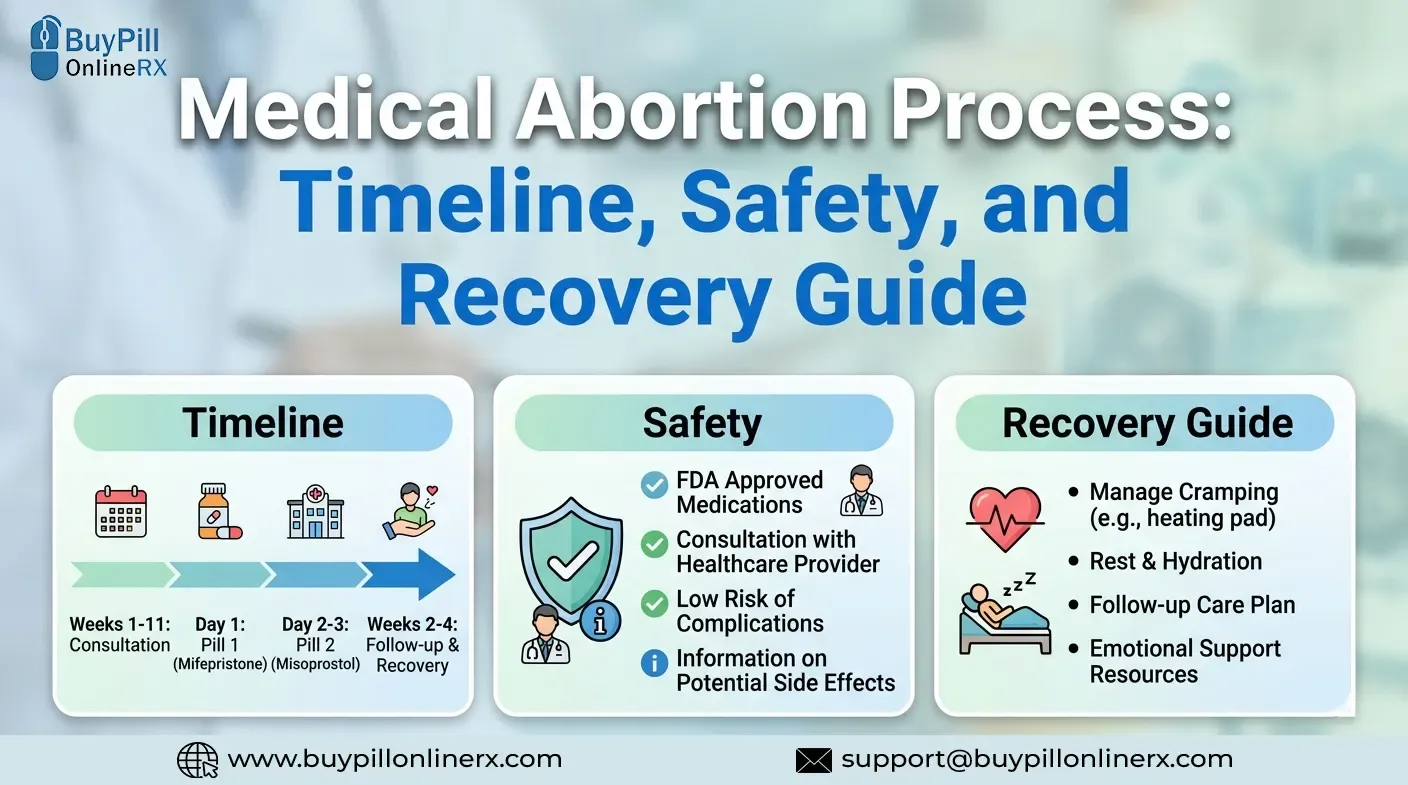
A medical abortion process is often misunderstood due to lack of awareness about how Mifepristone and Misoprostol pills work. However, understanding the procedure, its safety, and recovery at home serves as an insight into why so many women opt for a medication method for early pregnancy termination.
In this blog, we drive into a thorough explanation about the non-invasive approach of ending a pregnancy, when self-initiated in a private setting.
What Is a Medical Abortion?
In layman’s terms, the medical abortion meaning refers to usage of pills to end a pregnancy:
· Unlike a surgical abortion, which is a clinical procedure performed by trained professionals with tools to empty the uterus, the abortion pills process causes hormonal changes and urges physical responses naturally in the body to expel the pregnancy products.
· A medication abortion is usually preferred by women in early pregnancy. It can be performed only within the initial 10 to 12 weeks of conception.
· It offers privacy, comfort, and complete control to the individual. You must follow the abortion pill dosage instructions from a physician to do it yourself.
Medical Abortion Timeline
The medical abortion process timeline is not the same for everyone. However, a week or so is the maximum wherein a person can expect successful termination.
1. Day 1: First Medication Phase
· The abortion begins with use of Mifepristone 200mg orally ingested with water. This pregnancy hormone-blocker sheds the endometrial lining by stopping the progesterone production.
· Some may find light spotting or mild nausea. However, the actual abortion effects begin after use of the second medication, giving you sufficient time to prepare emotionally as well for the next step.
2. Next Phase (Within 24–48 Hours)
· Misoprostol 200mcg x 4 pills are administered buccally/vaginally/sublingually after 24 to 48 hours of Mifepristone use. It causes the uterus to contract regularly to remove the pregnancy contents easily.
· Further, the medicine softens and widens the cervix to expel the pregnancy tissues efficiently. The normal symptoms are abdominal cramps and pain, heavy vaginal bleeding, nausea, dizziness, vomiting, stomach upset, etc.
3. Completion Stage
· The symptoms are at their peak in the first 24 hours, but may extend for the next couple of days until the uterus is vacated of all the pregnancy sections.
· Once the womb empties, the heavy bleeding and cramping begin to reduce. Other side effects also reduce eventually, though light bleeding can go on for 2 to 4 weeks.
What to Expect During the Process
The experience related to a medical abortion process may differ from a person to another, but there are some shared encounters:
1. Cramping Intensity: You may feel moderate to strong menstrual-like cramps due to intense uterine contractions. Pain relief medicines and heating pad application can provide some comfort.
2. Bleeding Duration: The bleeding is heavier than a normal period, with passing of small to large blood clots. The blood flow is heavy for the initial 6 hours to 24 hours, thereby reducing according to how soon the pregnancy contents leave the uterus.
3. Side Effects: Some of the common side effects apart from cramping and bleeding are fatigue, diarrhea, headaches, dizziness, nausea, and vomiting.
4. Emotional Responses: You may experience several emotions, including sadness, relief, anxiety, etc. It is okay to feel different emotions, validate them and trust yourself – you will get through this phase.
Safety of Medical Abortion
Many may wonder – is medical abortion safe as claimed by pro-choice folks. But the fact is beyond activism, it is a scientifically-backed truth that abortion pill safety is undisputed for early pregnancy termination. When you take the FDA-approved pills within the gestational limit of 10-11 weeks, the success rate is 95-98% for Mifepristone and Misoprostol procedure.
Recovery After Medical Abortion
Following a medical abortion process, the recovery happens physically as well as emotionally:
1. Physical Recovery
For the first 2 to 4 weeks, the bleeding reduces to light flow and spotting before ending altogether. Right after the procedure, it is advised to take enough rest at least for the initial couple of days to enhance healing and recovery. Do not engage in strenuous exercise or until your energy levels replenish, and bleeding ends.
2. Emotional Recovery
Gradually, the pregnancy hormone levels dwindle and related symptoms such as elevated emotions and mood swings also disappear. So, have patience, any mood fluctuations last for just a few weeks before the body finds the way back to non-pregnancy state.
3. Aftercare Tips
Eat nutritious food and add vitamins, iron, fiber, lean proteins, complex carbohydrates, omega-3 fatty acids, folate, etc. to your diet. Keep a check on every symptom following an abortion. Use large sanitary pads for the bleeding instead of tampons or menstrual cups to keep a track of bleeding as well as prevent infections.
Possible Side Effects
While the medical abortion process is safe, it includes a few temporary side effects such as cramping due to uterine contractions, heavy bleeding to flush the pregnancy out, mild fever or chills for a short time due to the physical effort involved in pregnancy termination, and few temporary discomforts such as nausea, vomiting, stomach upset, dizziness, headaches, body aches, etc.
When to Seek Medical Help
Mostly, a medical abortion process is free of complications. But in some rare cases, it is vital to seek medical attention, especially in scenarios like:
· If you soak two or more large-sized sanitary pads every hour for the next 2 consecutive hours.
· If pain relief medicines and other pain management techniques are also unable to reduce intense abdominal pain.
· If you have a fever of 100.4°F (38°C) or over that lasts more than 24 hours following the Misoprostol administration.
· If there is no vaginal bleeding in 24 hours of using Misoprostol pills.
· If you notice a foul-smelling discharge from the vagina.
Frequently Asked Questions
Here are some common FAQs about a medical abortion process at home:
1. How long does medical abortion take?
It can take up to 24 hours after the second medication in the majority of cases to end a pregnancy. However, a few symptoms may linger, with light spotting occurring for 2 to 4 weeks.
2. Is medical abortion painful?
The abdominal cramps are strong for the initial hours while the uterus is actively letting out the pregnancy tissues. However, the abortion pain levels reduce eventually. You can take pain medicines to counter the discomfort.
3. How effective are abortion pills?
The Mifepristone and Misoprostol procedure has a success rate of 95-98%, while the Misoprostol-only process has an efficacy rate of 85-95%. The earlier the medicines are used in the pregnancy, greater chances of medical abortion success.
4. Can medical abortion be done at home?
Yes, most women choose to self-perform a medical abortion process at home in their own space, comfort, and convenience. It is a cost-effective, private, and non-surgical method to eliminate an unintended pregnancy early.
5. What happens after taking abortion pills?
After taking the abortion pills, the endometrial lining sheds to end the pregnancy support. Further, the pregnancy tissues exit the body facilitated by uterine contractions and expelled via the vaginal bleeding.
Conclusion
A medical abortion process is a preferred in-home non-invasive method to end an early pregnancy. It involves Mifepristone and Misoprostol pills, with temporary symptoms such as heavy vaginal bleeding, abdominal cramps and pain, dizziness, nausea, vomiting, headaches, tiredness, stomach upset, etc.
Understanding the medication abortion timeline, safety tips, aftercare, and recovery steps helps with awareness about tackling the procedure by yourself. So, learn more about abortion pill options and explore safe guidance resources to have an effortless pregnancy termination experience when need arises.