

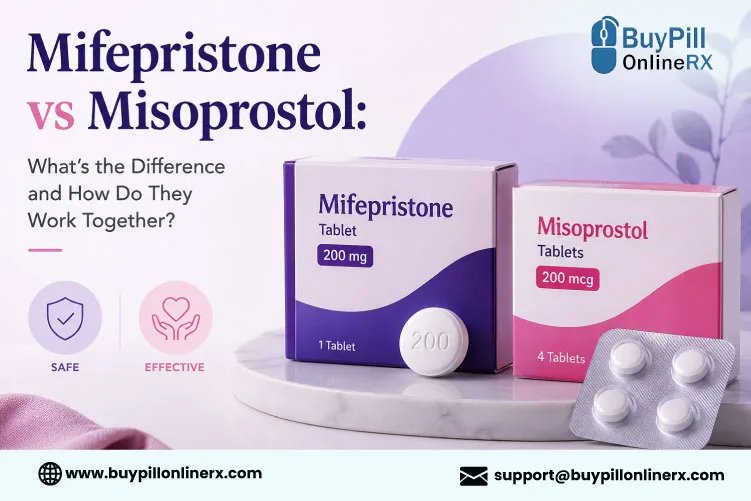
A pregnancy can be terminated either using abortion pills (Mifepristone and Misoprostol) or surgically at a clinic/hospital. For an early pregnancy (gestational limit up to initial 12 weeks), women often prefer the medication method, as it can be self-performed at home in privacy. Understanding Mifepristone vs. Misoprostol action mechanism, dosage, time of taking the pills, etc. are important for a safe and seamless process.
In this blog, we will talk about the Mifepristone and Misoprostol abortion pills, how they are different from each other, and how they work together for a home abortion.
What is Mifepristone?
Mifepristone is the primary medication used in abortion pill process. It is an antiprogesterone i.e. it blocks the pregnancy hormone, progesterone to shed the endometrial lining. As a result, the pregnancy portions detach from the uterus wall, so that the pregnancy no longer continues. Take this pill orally with water on the day 1 of the procedure.
What is Misoprostol?
Misoprostol is the second medication taken 24 to 48 hours after Mifepristone. You take 4 x 200mcg pills buccally/vaginally/sublingually. This prostaglandin medicine causes uterine contractions to expel the conception products. It is an essential pill to successfully complete the medical abortion procedure. The pregnancy tissues exit via heavy vaginal bleeding.
Mifepristone vs. Misoprostol: Key Differences
Here is more about Mifepristone vs. Misoprostol differences:
· Action Mechanism:
Mifepristone ends the pregnancy by restricting progesterone hormone. As a result, the pregnancy separates from the endometrium as the uterine lining sheds. Whereas, Misoprostol causes contractions in the uterus so that the pregnancy passes out of the vagina. It further ripens and dilates the cervix for removing the pregnancy items.
· Function in Process:
Mifepristone does not cause any significant side effects. It may however lead to light spotting and nausea in a few individuals. After taking Misoprostol, heavy vaginal bleeding is expected initially for 2-3 days. Abdominal cramps and pain are natural outcomes from the contractions. This is the phase when the pregnancy parts exit the system. After a successful termination, the bleeding reduces but continues for a few weeks.
· Dosage Timing and Method:
Mifepristone is taken with water orally on day 1, while Misoprostol is taken 24 to 48 hours following the progesterone blocker. Either you may insert the 4 Misoprostol inside the vagina, or place the pills under the tongue or two each in both cheek pouches for 30 minutes as the contents melt. Ingested the dissolved medicine thereafter.
· Effects on the Body:
Mifepristone puts a stop at the pregnancy without leading to any major side effects. But Misoprostol intake causes abdominal cramps and pain from contractions, nausea, vomiting, headache, tiredness, dizziness, and stomach upset. Bleeding helps pregnancy to get released from the vagina. These effects are temporary and expected for a safe medical abortion.
How Mifepristone and Misoprostol Work Together
Here are details of how Mifepristone and Misoprostol pills together cause a successful medical abortion:
· Mifepristone and Misoprostol Together:
Mifepristone starts the abortion pill procedure by ending the pregnancy, acting as a progesterone blocker that sheds the endometrial lining. Misoprostol performs the next crucial step of doing away with pregnancy parts from the womb via uterine contractions and cervical widening.
· High Efficacy Rate:
These pills ensure a better success rate of 95-95% for pregnancy termination. You can take Misoprostol pills alone, in this case, a higher dose is required – essentially 800mcg thrice at an interval of 3 – 4 hours each for the dosage.
· Why Take Both the Abortion Pills:
However, the efficacy rate for Misoprostol alone is 85-95%. Taking Mifepristone and Misoprostol meds in a step-by-step combined process ensures higher chances of success and smooth procedure.
Effectiveness of the Combined Method
Like we mentioned above, Mifepristone and Misoprostol deliver a success rate of 95-98%, whereas Misoprostol only offers efficiency level of 85-95%, it is not a surprise that women order Mifepristone and Misoprostol pills together. However, in regions with inadequate access to Mifepristone, people may have no choice but to use Misoprostol alone.
While both medicines are effective, here are the factors that may influence the abortion pill success:
· Follow the dosage instructions strictly as guided by a physician. Make sure Mifepristone is taken at the first and Misoprostol is only used after 24 to 48 hours.
· Since Misoprostol is taken buccally/sublingually or vaginally, keep in mind to not swallow the pills directly with water, which you otherwise do for Mifepristone.
· As stomach upset is a side effect, avoid heavy meals and spicy food or any food that may increase the risk of diarrhea. Do not drink alcohol or ingest any interacting substances, medicines, etc.
What to Expect During the Process
Here is more clarity about what happens during Mifepristone and Misoprostol procedure:
· Common Physical Effects:
The physical symptoms include heavy bleeding, abdominal pain and cramps, dizziness, nausea, vomiting, tiredness, stomach upset, headaches, etc. These are from hormonal fluctuations and natural miscarriage-like symptoms. Once the uterus empties, these effects will gradually reduce and end.
· Symptoms Timeline:
Bleeding is moderate to heavy in the first 2-3 days, the time when the products of pregnancy escape the uterus. Nausea, vomiting, diarrhea, headache, stomach upset, dizziness, tiredness – generally result after Misoprostol and may linger till successful termination. Bleeding becomes lighter and turns to spotting, lasting for 2-4 weeks.
· Normal vs. Concerning Signs:
While the mentioned symptoms are normal. If these get out of hand, you will require medical attention. Some of the warning signs are foul-smelling vaginal discharge, soaking 2 or more pads every hour for next two hours (excessive bleeding) after Misoprostol, extreme lightheadedness or dizziness, serious weakness, severe pain not reducing even after pain relief medicines, or a high fever 100.4°F (38°C) lasting over 24 hours.
Safety and Precautions
When it is about Mifepristone vs. Misoprostol, here are a few things to keep in mind:
· The medication method is not suitable if the pregnancy is outside the uterus (ectopic), gestational limit is over 12 weeks, on long-term corticosteroid therapy, with bleeding disorders, uterine disorders, an unremoved intrauterine device, chronic adrenal failure, and other contraindications.
· Seek medical guidance to understand abortion pill dosage, timing, symptoms, etc. if unsure about how to go ahead using the meds at home.
· If you experience any of the concerning signs as we mentioned above, seek emergency care at the earliest.
· It is vital to adhere to the abortion pill dose and intervals between Mifepristone and Misoprostol pills.
Recovery and Aftercare
After a successful Mifepristone and Misoprostol medical abortion process, recovery follows. Here is what to expect along with aftercare tips:
· You can resume regular chores in a couple of days. Taking rest is advisable as that will help to heal and tackle any tiredness and physical symptoms.
· After 2 weeks of the abortion, follow-up for pregnancy confirmation via an ultrasound scan. Also, discuss birth control options.
· When sexually active, remember to use contraception as fertility may return in a few days to weeks after pregnancy termination.
· Since pregnancy hormone hCG may take a few weeks to lower, you may still experience some number of emotions, nausea, breast tenderness, etc.
· If you want to speak to a therapist, counsellor, or trusted individual about your mental health and wellness, do go ahead.
· Avoid intercourse and douching while the bleeding lasts. Use larger sanitary pads than tampons or menstrual cups for the bleeding.
· Stay hydrated and drink plenty of water as well as electrolyte-based drinks. Take nutritious food and avoid unhealthy foods.
· Do not physically strain yourself for the initial 1-2 weeks while the symptoms are moderate.
· If the period does not return in or after 8 weeks, consult a doctor for a pregnancy check-up.
Common Myths vs Facts
Here are some misconceptions about Mifepristone vs. Misoprostol pills:
· Myth 1: Abortion Pills Are Not Safe
Fact: Medical pregnancy termination and the pills involved in the procedure, as both safe. It is recommended by the WHO and other healthcare organizations for early pregnancy.
· Myth 2: Medical Abortion Is Only Performed in Clinics
Fact: You can take Mifepristone and Misoprostol pills at home. The FDA recommends in-home abortion meds. Moreover, there are several authorized telemedicine platforms that provide the pills for at-home abortion.
· Myth 3: Medication Abortion is Not as Effective as Surgical Abortion
The abortion pill procedure and surgical abortion method, both share the same success ratio of up to 98% effectiveness. Thus, none of these methods are weaker to the next. You can depend on Mifepristone and Misoprostol pills for pregnancy termination.
Conclusion
Both the abortion pills have their unique functions and dosage. Mifepristone is antiprogesterone that sheds uterine lining to end the pregnancy, taken orally 200mg with water on day 1. Misoprostol is taken buccally/vaginally or sublingually after 24 to 48 hours of Mifepristone. It is a prostaglandin that expels pregnancy by dilating the cervix and leading to uterine contractions.
Understanding the role of Mifepristone vs. Misoprostol are both important as awareness helps to avoid mistakes during the procedure. With effectiveness of up to 98%, a medical abortion done at home is safe and convenient. You can easily depend on the medication method to end an early pregnancy.